Early Kitchen Memories: Winter
-Regina A. Bernard-Carreno
Dedicated to my Abuela Paulina…
As I continue to introduce my project to you, I am sitting with a few memories dealing with the complexity of my relationship with Caribbean Kitchens. There are so many images that come to mind, archived people walking into my frame, and for days, I am wading through old pictures of moments left undone, unwritten, unspoken.
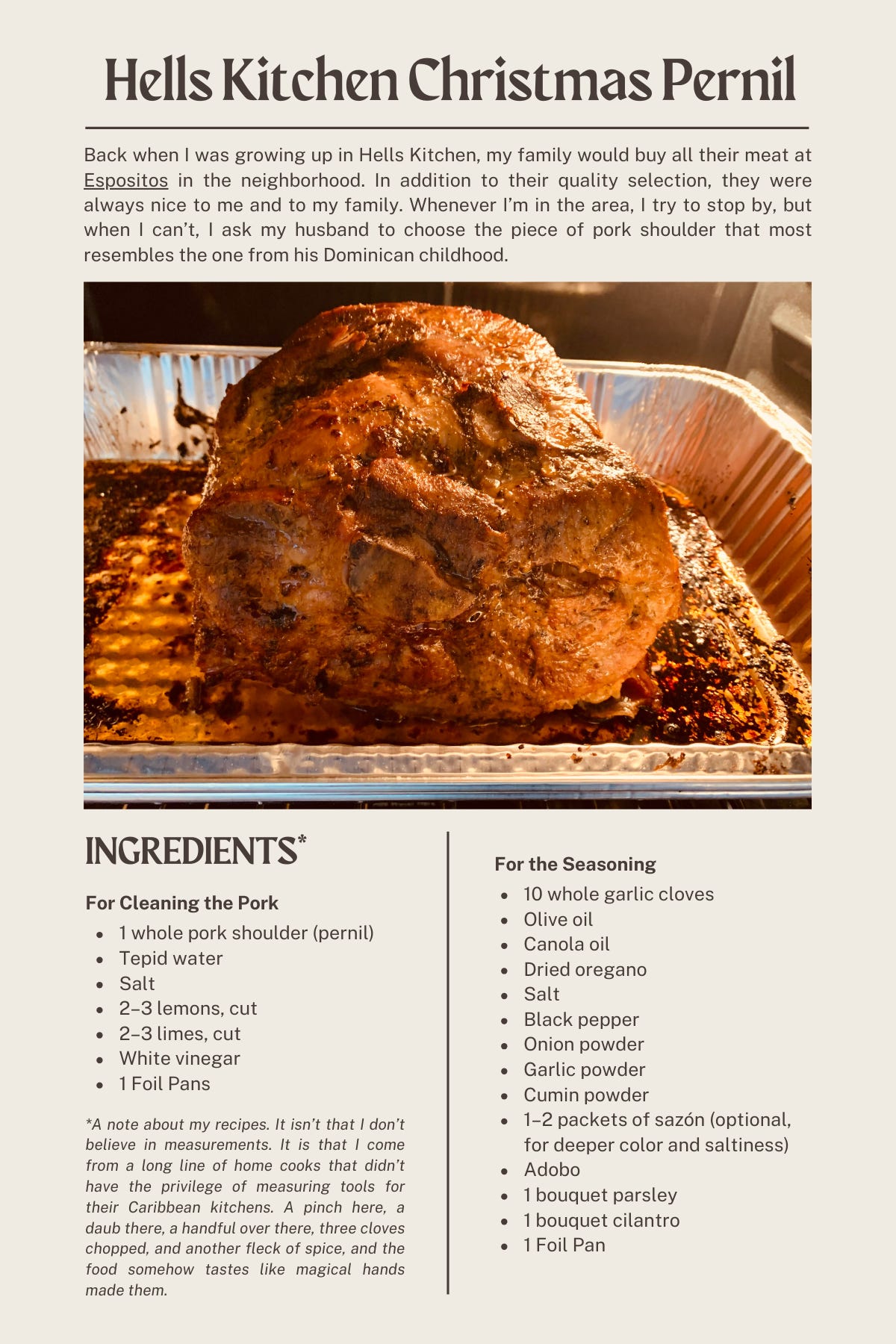
Speaking of undone…the holiday season of 2025 was a bust. I missed Christmas, a massive celebratory time for Caribbean communities. I spent the weeks leading up to the holiday racing around New York City, looking for gifts and wrapping paper and buying groceries to make a feast that I never usually get time to do. We had spent hours at the supermarket and butcher, trying to complete our shopping list, complete with a pork shoulder to University work kept me from visiting the skating rinks, standing under heat lamps to quickly peruse the posh store windows and imagine myself in the scene somewhere far from home with my children in tow and joy abound. Instead, my children and I spent the days neighboring Christmas in bed, dehydrated, wrapped in high fever, and delirious with a brutal flu that came with a host of strange symptoms. From my living room couch, I watched each time the fridge opened, my cut of pork dwindling, my vegetables soft and grayish, and the air stale with sickness instead of food smells (save for the hints of vapo rub, chamomile, lemon and peppermint tea boiling over the stove at the kind care of my husband).
On a recovery day, I thought about Christmas in my childhood apartment and the preparation that went into festive gatherings. If you know about this community and certain types of holidays, especially year-end celebrations, it’s usually a dedicated moment for extended family, uninvited guests, laughter, and of course, a variety of food. While we were always blessed enough to eat every day as children, Christmas celebrations were the opportunity for special spreads, full-on meals, stored-away cutlery, and other items you wouldn’t see every day. In both of the homes I spent my days and nights in, desserts like black cake* or flan, and main dishes like pernil** which were only brought out once the carols made their way onto the radio. Dishes like those either took weeks to prepare or hours to cook on the day of, maybe both. Yet, everyone waited patiently. Watching the fruits soaking in rum, later to become batter (of which my pediatric brain once mistook for chocolate cake), or seeing the bubbling top of the roast pork, turning into chicharron right before your eyes–it was all part of the experience. Some children waited on Santa and offered him treats to eat, but I instead made it my business to pass by the oven and peek through the small window to check the stages of our meal. Sometimes the wait was unbearable but its gift was everlasting.
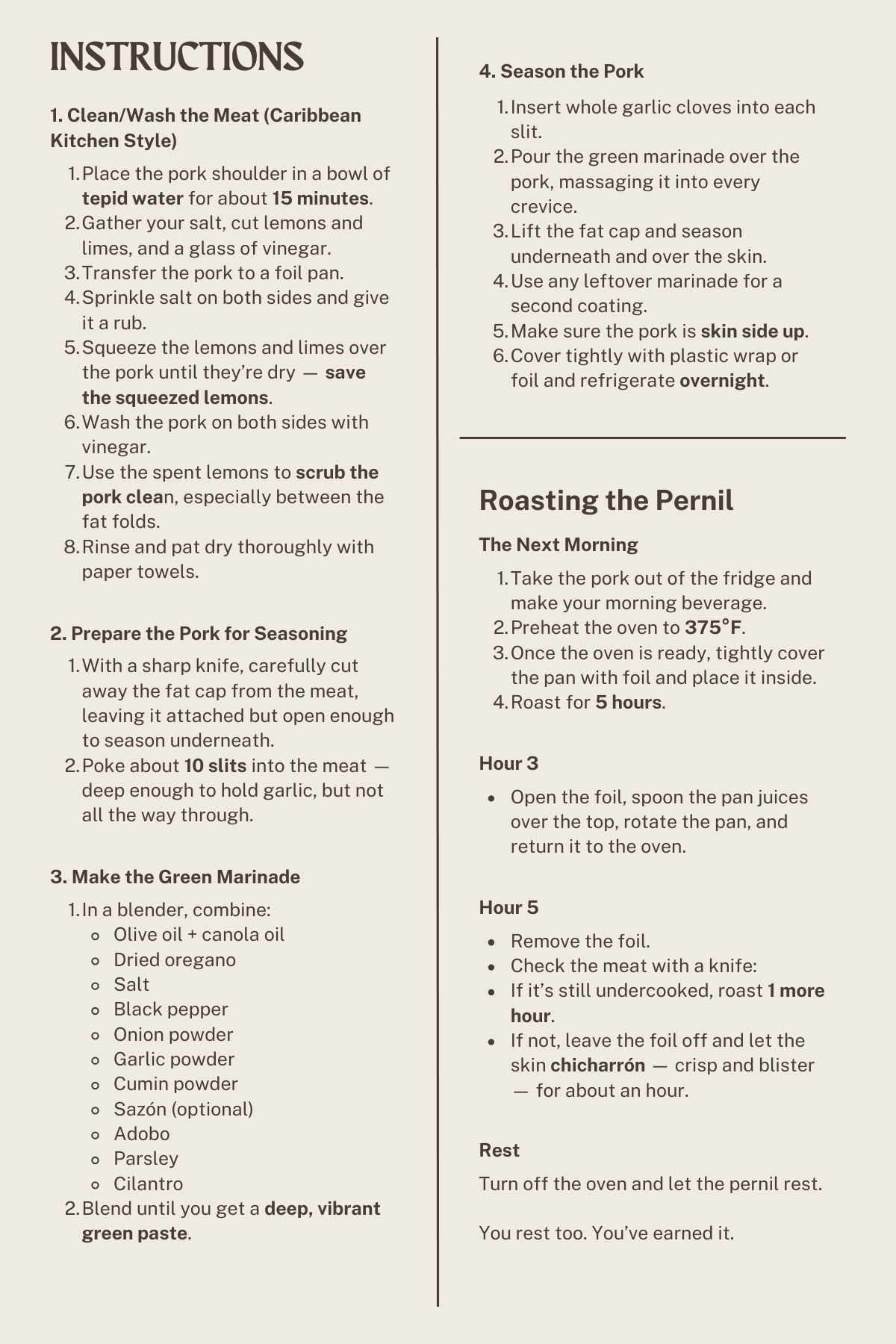
Given this, you can see why it broke my heart to have missed all the holiday festivities and not see the light of recovery until the early part of the New Year. When I finally was able to stand well, it was the kitchen that helped to bring me back to life. Although it was well after any period of pointed celebrations, and both my children and I were almost back to our daily schedules with work and school, I did make a pernil for my family. I then decided, after over decades of encountering this dish and all its process, to find not just the African and Indigenous connection but to try and track its roots in resistance. I know there is one and I’ll save that for a future entry, but now I’m curious…
What’s a Caribbean food that triggers your memories?
*Black Cake is a dessert from Guyana whose history stems from the hands of slaves under British colonialism. Stay tuned for a future post, where CKW will be diving deeper into this topic.
**Pernil also has its origins with Spanish colonizers, and it was African slave hands that actually made it edible!